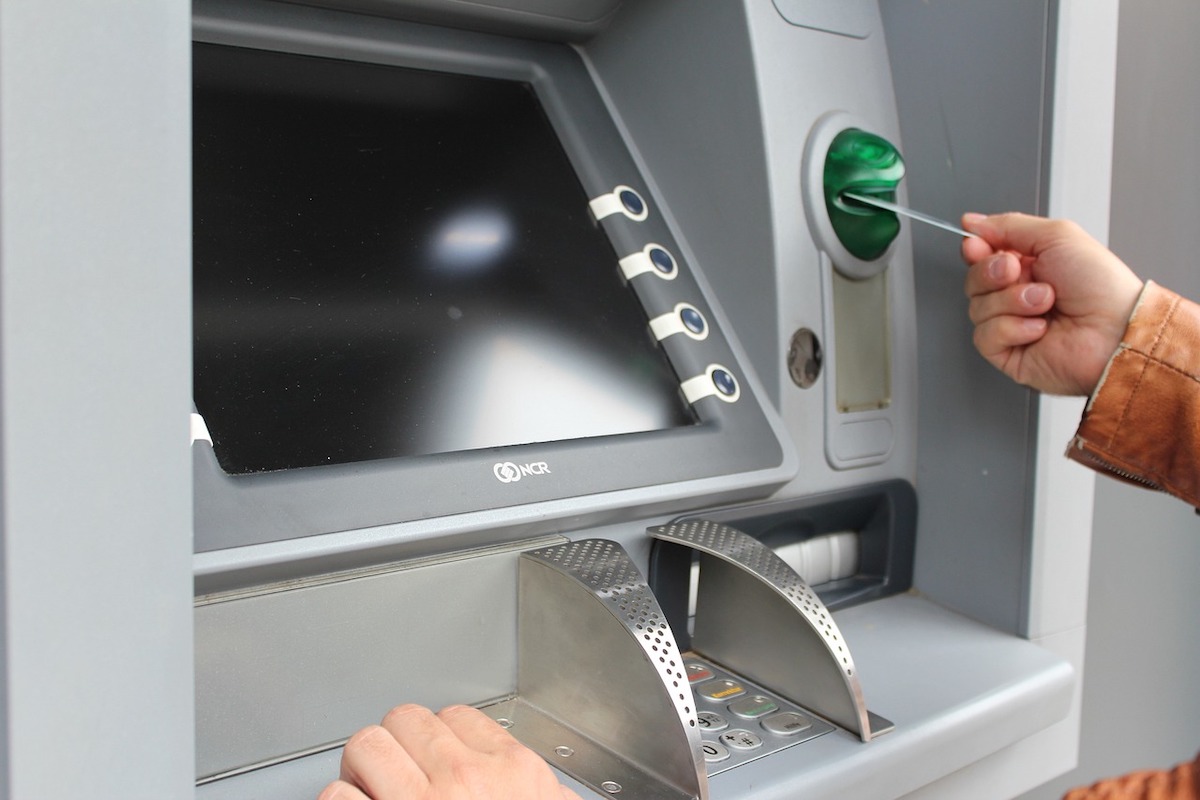
This is not a difficult concept, but it took me a long time and a lot of research to finally understand that the simplest compounding mechanism is one we have all used. To say it out loud might seem insignificant, but it is the “bank fixed deposit, “ which is also the only financial tool used by many retirees (regardless of its merits).
Fixed bank deposits
The following example involves depositing $10,000 (AUD, implied) into ANZ Bank fixed deposit, with “lump-sum deposit and lump-sum payment” (interest paid after one year), “automatic renewal of principal and interest upon maturity” (the principal and interest are automatically renewed for the next year’s deposit), and a floating interest rate of 1.5%.
| ANZ Bank, in AUD | year 1 | year 2 | year 3 | year 4 | year 5 | year 6 | ...... |
|---|---|---|---|---|---|---|---|
| Principal $10,000 | $10,000 | $10,150 | $10,320 | $10,457 | $10,614 | $10,773 | ...... |
| Interest | $150 | $152 | $155 | $157 | $159 | $162 | ...... |
| Interest withdrawn | 0 | 0 | 0 | 0 | 0 | 0 | 0 |
| Interest reinvested | $150 | $152 | $155 | $157 | $159 | $162 | ...... |
| Ending balance | $10,150 | $10,320 | $10,457 | $10,614 | $10,773 | $10,494 | ...... |
| Fixed deposit rate | 1.5% | ...... | |||||
| Reinvestment rate | 100% | ...... |
Doing nothing, after 6 years, the bank will hold your original $10,000 principal plus over $934 AUD in bank-given interest. Assuming this process is never interrupted, after about 47 years, your principal plus interest would double. This is an investment that will absolutely not lose money1, and since all interest is automatically renewed and compounded, it is a type of compounding machine.
The only problem is the 1.5% interest rate, which is a bit low, and eventual purchasing power is very likely to be eroded by inflation.
Introducing the “S&P500 Bank”
Here I’ll introduce another “bank”: the “S&P500 Bank2.” This bank’s annualized rate of return (likened to the interest rate here) over the past 20 years is 9.9%, provided you continuously hold it without selling, just like a fixed deposit.
| S&P 500 Bank, in AUD | year 1 | year 2 | year 3 | year 4 | year 5 | year 6 | ...... |
|---|---|---|---|---|---|---|---|
| Principal $10,000 | $10,000 | $10,990 | $12,078 | $13,274 | $15,588 | $10,773 | ...... |
| Interest (dividend) | $990 | $1,088 | $1,196 | $1,314 | $1,444 | $1,587 | ...... |
| Interest withdrawn | 0 | 0 | 0 | 0 | 0 | 0 | 0 |
| Interest reinvested | $990 | $1,088 | $1,196 | $1,314 | $1,444 | $1,587 | ...... |
| Ending balance | $10,990 | $12,078 | $13,274 | $15,588 | $16,032 | $17,619 | ...... |
| Compound rate | 9.9% | ...... | |||||
| Reinvestment rate | 100% | ...... |
Unlike a bank, an “index-type investment” like the S&P500 will not tell you the “fixed deposit rate”3 at the start. However, we know that this rate, over a long period, is generally a positive return4 and far exceeds the rate of a typical bank fixed deposit. Based on the S&P500’s performance over the past 30 years, the Compound Annual Growth Rate (CAGR) for a lump-sum investment is approximately 9.9%. With this rate, if you invested $10,000 AUD in 1995 and forgot about it (assuming automatic dividend reinvestment), you would have $66,100 AUD5 today..
The “Google Bank”
If this is not good enough, consider the “Google Bank” (referring to Google Alphabet Inc.), an incredibly generous “bank”!
The “Google Bank” gave an annualized compound return of approximately 15% over the 20 years from early 2002 to the end of 2022 (data is dividend-adjusted, but dividends were not reinvested). If you made a lump-sum investment of $10,000 AUD in 2005 and forgot about it, by the end of 2025, that $10,000 would have become $163,700 AUD without having to do a thing.
The concept of “compounding machine”
You should now understand the power of “long-term investing” and the “compounding machine.” We compared the ANZ Bank Fixed Deposit, the “S&P500 Bank,” and the “Google Bank” to illustrate the concept. If you are new to investing, the easiest way to understand compounding is by comparing bank CD (certificate of deposit) to long-term stock investing6 7. However, there is a caveat.
While the fixed deposit rate is known from the start, and the “S&P500 Bank” rate is uncertain but likely positive in the long run, the “Google Bank” (equity investment) is the trickiest. For this type of corporate equity investment, you must discern what its future interest rate will be. If you choose the wrong company8, not only you may not make money, and you are very likely to lose a lot of money.
The key is to find the machine with a high “interest rate” and hold it long-term, allowing compounding to generate its power!
(The End)
(Bonus content)
The article emphasizes that Fixed Deposits, Bonds, and Stock Investments can be understood by thinking of them interchangeably to calculate their “intrinsic value”9. They have both similarities and differences in their compounding mechanisms:
| Fixed Disposits | Bond | Stock Investment | |
|---|---|---|---|
| Maturity Date | None | Yes | None |
| Compounding Ability | Yes (as long as you keep renewing) | None10 | Depends on payout ratio11 |
| Reinvestment Rate | 100% (Principal and interest renewed) | 0 | 0-100% (Depends on payout ratio) |
| Interest Rate (Coupon) | Already set | Coupon Rate is Fixed | Must be researched and evaluated by an "Analyst" based on the company's ROE |
| Management Capability | Does not affect value | Does not affect value | Management's ability greatly impacts investment value |
| Profit Ceiling | Determined by time | Fixed12 | Determined by "growth," "competitive advantage," and "management"13 |
Footnote 註釋:
- Remember Warren Buffett’s famous quote? “The investing rule #1: never lose money; rule #2: never forget rule #1.”. In the case of Fixed deposits, they are indeed seen as “not losing money” (ignoring inflation) investment and are guaranteed by the State agent FCS (Financial Claims Scheme) up to a certain amount.[↩]
- SPY ETF: Ticker SPY is a market capitalization ETF (index-like fund) launched in 1993. Its 20-year total return, including dividends, is approximately 720%, or about 11.1% annualized. Market veterans often treat it as the “gold standard” for equity growth, but like 0050, SPY distributes dividends in cash and does not have an internal automatic reinvestment feature within the fund structure.[↩]
- CAGR as Interest Rate: Here I simplifies complex index investing by referring to its CAGR (Compound Annual Growth Rate) as the “fixed deposit rate,” which of course cannot be known in advance for an index fund.[↩]
- Index Trend: The long-term upward trend of major indices, which index funds track closely, is generally accepted, which is why Warren Buffett recommends index ETFs for those who cannot research individual stocks.[↩]
- The Pure Theory: The author acknowledges that the 20-year 9.9% CAGR for a lump-sum investment with continuous reinvestment is a theoretical calculation and requires “faith, conviction, persistence, and a bit of uncommon stubbornness.”[↩]
- Warren Buffett’s Analogy: For long-term investing, Warren Buffett often uses the analogy of “bonds” to help people understand “stock investment,” a concept that was key to understand stock investing.[↩]
- Intrinsic Value: The valuation of fixed deposits, bonds, stocks, and companies are all similar, as explained in John Burr Williams’ 1938 book, The Theory of Investment Value.[↩]
- Choosing the Wrong “Bank”: An example is the Enron “Bank,” however long you hold the stock of that company, you end up with losing everything.[↩]
- Intrinsic Value: The valuation of fixed deposits, bonds, stocks, and companies are all similar, as explained in John Burr Williams’ 1938 book, The Theory of Investment Value.[↩]
- Bond Compounding: Bond interest must be reinvested by the investor, but it's not always possible to buy assets with the same terms.[↩]
- Stock Compounding: The portion of earnings paid out as dividends does not compound (similar to bonds); only retained earnings have the mechanism for compounding.[↩]
- Bond Ceiling: The profit ceiling for a bond is fixed.[↩]
- Stock Ceiling: If you are right about the company, there is no upper limit to profit; if incorrect, the principal may be lost.[↩]
